Upsides To Syed Mokhtar Buying Into FGV

[Original article: https://www.malaysiakini.com/letters/494323 ]

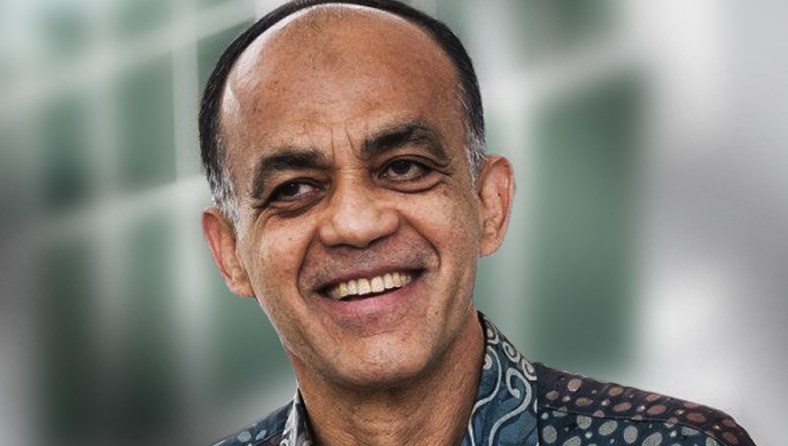
Word from the grapevine has it that business tycoon Syed Mokhtar Albukhary is looking at the possibility of acquiring a stake in ailing plantation company, FGV Holdings Berhad (FGV). This news could not have come at a better time. After all, he is a visionary leader who is well-supported by a highly capable team. It would make perfect sense for the shareholders of FGV to listen to what the business tycoon has to offer.

Even prior to FGV’s reporting of its RM1.08 billion losses for 2018, the organisation has been monetising its assets to mitigate anticipated losses for 2019. FGV hoped that the “extraordinary” profits derived from the asset sale would help boost its financial performance for the year.

Unfortunately, this is only a “makeshift” measure and not a long-term solution. Furthermore, without proper due diligence, it might be disposing of valuable assets. Businesses conducted in this fashion are not sustainable, and FGV would continue to face losses in the years ahead if no concerted efforts are taken to restructure the organisation or its business model.

It was previously thought that the White Paper was the answer to Felda, FGV woes. But unfortunately, that fell short. It has been six months since the announcement of the White Paper, and there have been no significant and sustainable initiatives arising from the White Paper to suggest that FGV and Felda can benefit from healthy revenue streams and turnaround their escalating losses. Felda’s debt currently stands at RM14.4 billion and FGV is not helping with its dwindling performance since its listing in 2012.

So, when news about Syed Mokhtar’s intent to acquire a substantial stake in FGV circulates, it would be right and for all intent and purposes for the shareholders of FGV to listen to what he has to offer – not that FGV has been outstandingly successful all these years!

FGV shares are currently traded around 90 sen, which is 80 percent below the IPO price of RM4.55. Given the vast price differential, there would some deliberations and concessions before an equitable price is arrived at, if at all.

But looking at the upsides, it could be a deal worth considering.

1. Reviewing the terms of the Land Lease Agreement (LLA) – In 2012 FGV was given the rights to manage 355,000ha of Felda’s plantations under a 99-year-lease. In return, Felda was to receive RM248 million, plus 15 percent share of profits annually. This did not happen because FGV was paying Felda far below the RM800 million it (Felda) needed to manage the well-being of settlers. This is why the settlers are having problems today.

Imagine, the proposition if the land was returned to Felda (pre-FGV’s IPO). How would Felda fair in its performance then?

2. Investing and revamping downstream, sugar and logistics sectors – By investing and revamping the downstream, sugar and logistics sectors would enable FGV to be more streamlined and focused as part of Felda’s value chain.

Investing in new high-tech has enabled plants and facilities that are more product-oriented (and not dependent on CPO price fluctuations) could mean a possible turnaround for FGV moving forward.

3. Instilling the concept of smart farming and new technologies – Under the circumstances, this would benefit Felda and the settlers, primarily in terms of increased yield per acre.

It is quite certain that there would be other areas which require restructuring. In a nutshell, Felda, FGV and the federal government must possess the will and determination to implement changes for the betterment of FGV thus enabling Felda to realise its aspirations.

FGV’s major shareholders (as of Aug 30, 2019) are Felda (21.24%); Felda Asset Holdings (12.42%); Urusharta Jamaah Sdn Bhd (7.78%); Kumpulan Wang Persaraan (5.6%); Koperasi Permodalan Felda (KPF) (5.24%); Pahang state government (5%). The rest is a free float. Urusharta is a MOF company.

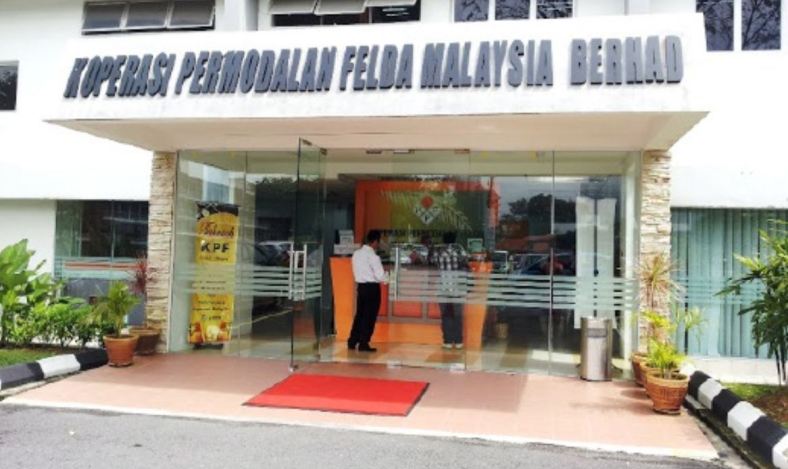
On a separate note, news has it that KPF may raise rather than reduce its stake in FGV moving forward. KPF owns a 5.24 percent stake in FGV.

What is strange here is FGV’s profits have been dwindling over the years, resulting in an ultimate RM1.08billlion loss last year.

What is the use of KAF wanting to increase its stake when it had failed to bring value or contribute towards FGV’s performance in the past years? In fact, contrary to increasing its stake, KPF should just relinquish its stake in FGV altogether.

Given this, what FGV needs is a “lifeline” to revamp and turnaround the business to show sustainability and profitability. It has come to a point where the guardians of Felda and FGV need to be more pragmatic and produce resolutions that can positively impact FGV.

It’s times like these that we need the decisive actions of a “white knight” to save and turnaround national assets. It is time for the leadership to be open and consider proposals that are sustainable and that could bring good prospects not only to shareholders but also the settlers.
Apa Logiknya KPF Meningkatkan Saham Dalam FGV?

Baru-baru ini, The Edge melaporkan dalam satu berita khas bahawa ahli perniagaan bumiputera ternama, Syed Mokhtar AlBukhary, merancang untuk membeli saham di dalam FGV Holdings Berhad.

Dalam perancangan itu, beliau akan membeli 20 peratus di dalam FGV, lantas membenarkan beliau untuk mengambil alih syarikat tersebut.

Beliau merancang untuk membeli sebahagian saham tersebut daripada Felda, yang memegang saham dalam FGV sebanyak 33.6 peratus, dan membeli terus saham daripada Koperasi Permodalan Felda Malaysia (KPF) yang memegang 5.25 peratus.

Media menjangkakan bahawa Syed Mokhtar akan menghadapi tentangan daripada Felda dan FGV sendiri daripada melaksanakan pembelian tersebut.

Yang menarik perhatian dalam berita itu juga ialah, seorang pegawai berjawatan tinggi yang tidak dinamakan mengatakan bahawa KPF merancang untuk menaikkan sahamnya di dalam FGV.

Ini boleh dikatakan pelik, kerana keuntungan FGV susut secara konsisten sejak penyenaraiannya pada 2012, sehingga mencatatkan kerugian terburuk sebanyak RM1.08 bilion pada tahun lepas.

Jadi kenapa KPF berminat untuk menaikkan sahamnya lagi jika ia hanya mendatangkan kerugian?

Malah, mereka juga gagal membawa sebarang nilai atau sumbangan untuk memperbaiki prestasi FGV pada tahun-tahun sebelumnya.

KPF sepatutnya menjualkan sahaja sahamnya di dalam FGV kepada syarikat lain yang lebih berkelayakan dalam mengurus FGV.

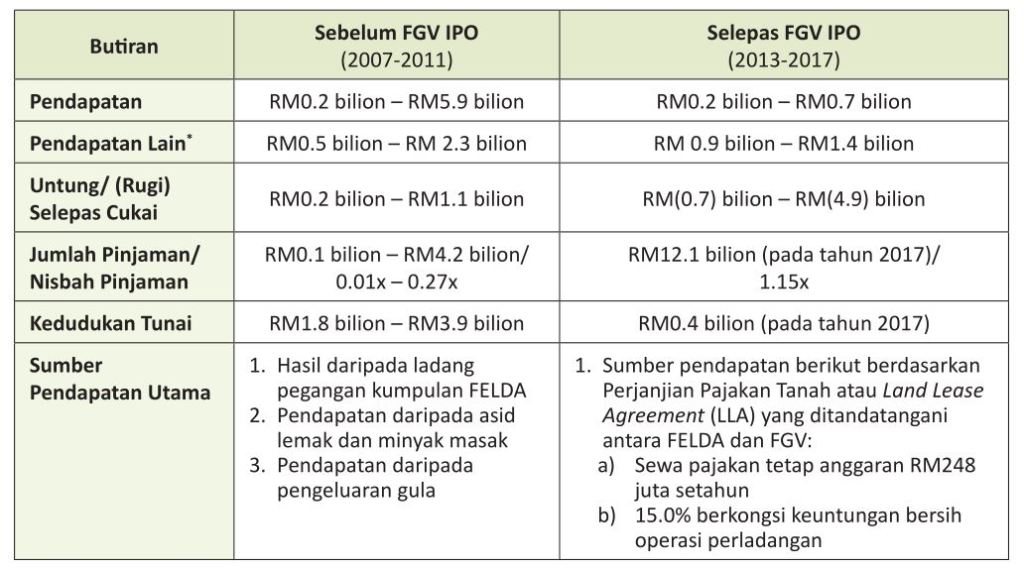
FGV kini berada dalam prestasi yang tidak meyakinkan, dan mereka juga gagal memenuhi Perjanjian Pajakan Tanah (Land Lease Agreement, LLA) dengan Felda dalam memberikan wang yang telah dijanjikan.

Menurut LLA, FGV harus memberikan RM248 juta kepada Felda setiap tahun berserta 15 peratus keuntungan daripada operasi perladangan.

Sumber – Kertas Putih Felda

Disebabkan gagal memenuhi LLA, Felda pun sengsara. Dan yang lebih sedih lagi, peneroka yang merana di atas kegagalan pengurusan pihak atasan.

Oleh itu KPF tidak ada sebab yang munasabah untuk menjaga atau meningkatkan sahamnya dalam FGV.

Dengan menjual saham FGV yang dipunyai KPF kepada Syed Mokhtar, LLA ini boleh dirujuk kembali dan Felda boleh kembali meraih sumber pendapatan utamanya seperti dahulu.

Contohi syarikat ladang sawit swasta

Dari Utusan : https://www.utusan.com.my/rencana/forum/contohi-syarikat-ladang-sawit-swasta-1.972773

UMUM mengetahui Felda sekarang sedang berada dalam situasi sangat teruk kerana kerugian yang dialami oleh agensi itu pada tahun-tahun lepas.

Kerugian ini disebabkan oleh kelemahan pengurusan kewangan Felda apabila wang agensi berkenaan digunakan untuk membuat pelaburan tidak menguntungkan.

Semua ini terjadi selepas penyenaraian FGV Holdings Berhad (FGV) pada 2012. Selepas mendapatkan RM6 bilion daripada penyenaraian itu, Felda membelanjakan 24 peratus daripada duit itu dalam pelaburan tidak menguntungkan manakala baki 76 peratus digunakan untuk perbelanjaan tidak produktif.

Walaupun harga kelapa sawit mentah (CPO) mula menurun dengan mendadak sejak 2011, ini tidak boleh dijadikan alasan terhadap kerugian Felda kerana syarikat perladangan kelapa sawit swasta di Malaysia langsung tidak mencatatkan kerugian sejak tahun itu.

Ini berdasarkan perbandingan rekod keuntungan sebelum cukai dalam sektor perladangan kelapa sawit syarikat-syarikat swasta berkenaan.

Jika kita perhatikan rekod syarikat-syarikat swasta, mereka mencatatkan keuntungan konsisten walaupun dengan kejatuhan CPO sejak 2011.

Namun Felda mencatatkan perubahan mendadak sekali jika dibandingkan dengan syarikat-syarikat swasta ini. Daripada keuntungan paling tinggi pada 2012, terus jatuh ke kancah kerugian pada 2013 dan gagal kembali mencatat keuntungan sehinggalah mengalami kerugian tercorot pada 2017.

Jelas sekali perbezaan antara Felda dan syarikat-syarikat swasta. Di manakah silapnya? Tentu ia melibatkan pihak-pihak yang diamanahkan kerajaan untuk mengurus agensi berkenaan.

Melihatkan pada rekod ini, Felda sudah tentu boleh mencontohi syarikat-syarikat swasta supaya ia kembali mencatatkan keuntungan.

Walaupun terdapat perbezaan ketara antara Felda dan syarikat-syarikat swasta di mana Felda bertujuan menaik taraf sosioekonomi peneroka di luar bandar, manakala syarikat swasta hanya berasaskan keuntungan, Felda mungkin boleh melihat bagaimana syarikat-syarikat swasta ini mengekalkan keuntungan walaupun sewaktu harga CPO rendah.

Bagaimana mahu menolong peneroka jika Felda sendiri mengalami kerugian besar tahun demi tahun? Pada pendapat penulis, sudah tiba masanya untuk Felda belajar dan menjalankan usahasama dengan syarikat-syarikat swasta.

HANNAH J

FGV tiada maklumat anak syarikat terbabit pembakaran di Indonesia

KUALA LUMPUR: FGV Holdings Bhd (FGV) masih belum menerima sebarang laporan berhubung pembabitan anak syarikatnya dalam pembakaran terbuka di Indonesia yang menyebabkan kejadian jerebu di negara ini.

Ketua Eksekutif Kumpulan FGV, Datuk Haris Fadzilah Hassan, berkata situasi yang berlaku di Indonesia agak rumit memandangkan terdapat pekebun kecil Perkebunan Inti Rakyat (Inti) dan Perusahaan (Plasma) di sekitar ladang milik syarikat perladangan besar.

“Sehinggalah mempunyai data, kami tidak boleh berkata sama ada perkara ini berlaku atau tidak. Bagaimanapun, pada masa ini tiada sebarang laporan diterima.

“Ini meliputi semua ladang yang dimiliki di Indonesia dan di negara ini, FGV tidak mengamalkan pembakaran terbuka,” katanya ketika ditanya mengenai isu berkenaan pada sidang media di sini, hari ini.

Di Indonesia, FGV mengendalikan syarikat usaha sama ladang minyak sawit dengan Lembaga Tabung Haji di Kalimantan Tengah, Kalimantan Utara, Kalimantan Barat dan Pontianak.

Terdahulu, Haris Fadzillah hadir pada majlis pemeteraian perjanjian pengedaran antara anak syarikat FGV, Delima Oil Products Sdn Bhd (Delima Oil) dengan DKSH (Malaysia) Sdn Bhd (DKSH) bagi meluaskan pengedaran produk hiliran FGV ke dalam sektor Hotel, Restoran dan Kafe (HoReCa).

Hadir sama pada majlis itu adalah Ketua Operasi Sektor Perladangan FGV, Syed Mahdhar Syed Hussain dan Naib Presiden FMCG Asia Tenggara DKSH, Patrick Stillhart.

Perjanjian berkenaan merangkumi aspek pengedaran produk Delima Oil seperti SAJI, SERI PELANGI dan ADELA meliputi industri perkhidmatan makanan di Semenanjung Malaysia.

Sementara itu, mengulas lanjut mengenai kejadian jerebu, Syed Mahdhar berkata ia boleh menjejaskan kadar pengekstrakan minyak FGV untuk bulan Oktober.

Jelasnya, harga minyak sawit mentah semasa adalah sekitar RM2,100 bagi setiap tan.

“Jika saya memberi contoh bahawa lima tan tanaman sawit perlu diekstrak untuk mendapatkan satu tan minyak sawit, jadi ia adalah kira-kira 20 peratus.

“Jika merujuk kepada peratusan, impak yang boleh berlaku adalah nisbah peratusan buah tandan segar yang boleh diekstrak, ia mungkin memberi kesan sekitar 0.2 hingga 0.5 peratus dan itu adalah jumlah peratusan yang tinggi,” katanya.

“Bagaimanapun, kejadian jerebu itu tidak akan menjejaskan keuntungan FGV,” katanya.

Part 1: Illegal Immigrant Issue & Project IC – More Than Meets the Eye!

Project IC is a controversial initiative that involved the granting of citizenship to immigrants (whether legal or otherwise) in Sabah by giving them the MyKad identity cards. Originally initiated in late 1990s, the project catered to the evolving electoral patterns of the Sabah state government.

The idea was to change the demographic pattern of Sabah to make it more favourable to certain political parties, especially with regard to changing the electoral voting patterns. In 2012, former Dewan Rakyat senator and state assemblyman Chong Eng Leong alleged that there were some 700,000 “Project IC citizens” and about 200,000 of them were on the state electoral roll.

Continue reading “Part 1: Illegal Immigrant Issue & Project IC – More Than Meets the Eye!”

Boleh Percaya Ke Grant Thornton Consulting Ni?

Punca rezeki buat 1,200 pekerja Sabah Forest Industries (SFI) di Sipitang kini bergantung pada Grant Thorton Consulting (GTC), selepas satu transaksi yang berpotensi untuk menjualkan aset-aset SFI kepada sebuah syarikat tempatan dihentikan secara mengejut.

Namun, kita perlu bertanya jika GTC adalah pihak yang sepatutnya terlibat dalam jual beli SFI kerana firma perundingan itu telah melanggar protocol yang melibatkan jual beli aset-aset SFI. Bukan itu sahaja, baru-baru ini Majlis Laporan Kewangan (FRC) telah meletakkan audit daripada Grant Thorton (GT) di bawah pengawasan. Kenapa? Kerana pemeriksaan tahunan telah menunjukkan kejatuhan standard GTC  yang sangat ketara.

Continue reading “Boleh Percaya Ke Grant Thornton Consulting Ni?”

Grant Thornton: Tainted by Shoddy Practices

The livelihoods of about 1,200 Sabah Forest Industries (SFI) employees in Sipitang are in the hands of the Receiver and Manager, Grant Thornton Consulting (GTC) in Malaysia, after a potential sale of the company’s assets to a local company was brought to an unexpected halt.

Yet, we ask if GTC is really the right party to be involved in the SFI deal because the consulting firm contravened protocols involving the sale of the SFI assets. Not only that, just recently the Financial Reporting Council (FRC) put the audits from Grant Thornton (GT) under scrutiny. Why? Because the annual inspection showed a shocking drop in standards.

Continue reading “Grant Thornton: Tainted by Shoddy Practices”

Warisan not unified and unable to meet people’s needs

In an article on Borneo Post, Pritchard Gumbaris, the political secretary to Penampang member of Parliament and Deputy President of Warisan, Datuk Darell Leiking made a statement about the lack of transparency and inclusiveness on the state’s infrastructure project – Papar Dam (now renamed the Kaiduan Dam supposedly to be built at the Papar area, previously ear-marked at the Penampang-Papar border).

This was presumably because Darell Leiking made it clear that Penampang will not be touched in the state-government’s pursuit of dam-building. So, the Minister of Infrastructure, Peter Anthony decided to relocate the dam to Kampung Menderingin in the Papar river as the next option. This not only shows in-fighting within the Warisan government but also highlights the differences in opinions amongst state leaders. Now, the question is – would the MP of Papar, YB Ahmad Hassan of Warisan raise any objections or would he just tow the line?     

Continue reading “Warisan not unified and unable to meet people’s needs”

Warisan: A New Authoritarian Regime?

Warisan minister Peter Anthony was recently called out by Sabah Bersih 2.0 for his attempt at silencing civil society. The Infrastructure Development Minister made a statement that civil society groups should not be ‘inciting people’, and should follow laws.

The minister has also ignored calls by the people to review his decision on the Tanjung Aru Eco-Development (TAED) and Papar Dam projects, and for valid reasons, but their pleas have fallen on deaf years. He is not engaging with the people and seems comfortable with his authoritarian work ethics. 

He is literally telling civil society groups to just ‘shut up’, we know what we are doing! Peter is not the only one to imply that the people of Sabah are ignorant and do not know what’s best for them and thus should just ‘shut up’ and let people in power do as the like.

This dismissive attitude towards the rights and opinions of the people of Sabah seems to be the standard practice across the Warisan government representatives when it comes to projects that affect communities.

Chief Minister Shafie Apdal has been quoted spouting the same anti-rakyat (rhetoric) when it comes to defending and reinstating his much-criticised choices of projects from the old administration.

Shafie has deflected criticisms of the Papar Dam and TAED project by claiming that they are necessary, and that they will engage critics and the people of Sabah – but so far nothing has been forthcoming, aside from newspaper articles where he continues to insist on the importance of these rebooted projects.

The people of Sabah have long lived under administrations that have ignored their plight, dismissed their complaints and sacrificed the betterment of the rakyat for their own benefit. Shafie and the Warisan government are no different.

Warisan sold themselves as being better, more concerned and more caring than the previous administration – a government for the people of Sabah where concerns for the people, concerns for the environment and a dire need for economic development have to strike a balance.

Yet, all that they have done is rehash and recycle projects that they roundly condemned when they were opposition. They bring back projects like TAED and Papar Dam/Kaiduan Dam that, when in opposition, they promised would not be resuscitated because of the destruction it would cause, both to the environment and to the livelihood of the rural Sabahans. Similarly, their handling of Sabah Forest Industries (SFI) has resulted in the employees once again not being paid on time and in fear of their employment – just like in 2017.

They insist on making the same mistakes as the previous administration, mistakes that they condemned the previous administration for. They have become hypocrites from all the promises that they have broken to the people of Sabah.

And when questioned for it, they have only one answer – Be silent, don’t question us. We know what is good for you!

How will Sabah develop under the reign of these power-hungry leaders who are blind to the concerns of the people? How will the people of Sabah have a voice when their own leaders are making concerted efforts to silence them? When they look into the future of their state, do they see leaders that champion them – or leaders that step on them?

Without effective community engagement, the authoritarian rule will not survive.

Click on links for more information

https://www.thestar.com.my/news/nation/2019/06/26/sapp-sabah-govt-statements-about-papar-dam-taed-huge-disappointment/

https://www.malaymail.com/news/malaysia/2019/06/25/sabah-green-group-questions-u-turn-on-controversial-tg-aru-beachfront-proje/1765464